


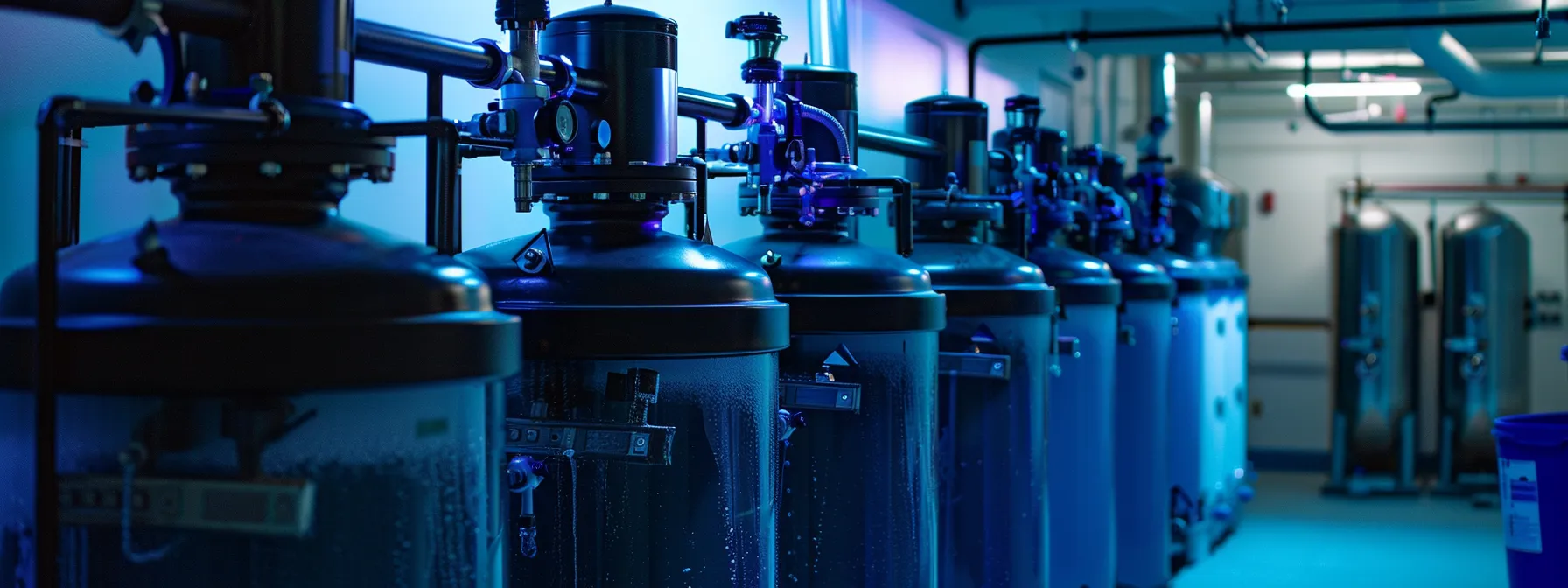
The quest for pure water is as old as civilization itself. From the earliest filtration methods to the most advanced technologies today, the pursuit for clean, safe water has been relentless. Deionization stands out as a pivotal process in this pursuit, providing high-purity water needed for a range of critical applications. Whether it’s in medical laboratories, pharmaceutical production, or high-precision manufacturing, the importance of deionized water cannot be overstated. Keep reading to uncover the intricacies and benefits of deionization water treatment systems.
Unveiling Deionization: The Process Behind Purified Water
Deionization is a water purification process that removes mineral ions from water, including cations and anions, to create deionized water or demi water. This purity is essential for processes like lead-acid battery maintenance or certain washing procedures. Ion-exchange resins are used in the process, selectively binding with and removing ionic impurities.
As water passes through these resins, unwanted ions are replaced with hydrogen and hydroxide ions, forming pure water. Deionization offers a level of purity that simple filtration cannot achieve, especially when highly purified water is a stringent requirement. Deionization is often used in conjunction with other purification methods and can be adapted to produce ultra-pure water through continuous electrodeionization (CEDI).
The Science of Deionization: How It Works
Deionization is a chemical process that uses polymeric ion-exchange resins to exchange ions in water. Charged functional groups on the resin beads capture unwanted ions and release desirable ones, replacing impurities with water-forming ions, hydrogen, and hydroxide. The process is cyclical, and the resins must be regenerated to remove accumulated ions.
Continuous electrodeionization (CEDI) uses electricity to regenerate the resins and migrate captured ions out of the water stream, making it an environmentally friendly solution. Efficiency can be influenced by factors like feed water composition and ion-exchange resin condition. Regular monitoring is crucial to ensure the system is functioning effectively and producing the required water quality.
Comparing Deionization with Other Water Purification Methods
Water purification involves various methods like sedimentation, filtration, reverse osmosis, and distillation. Each method has its effectiveness, operational costs, and energy efficiency. Deionization is effective in eliminating ionized species but doesn’t remove organic contaminants or microorganisms. Reverse osmosis (RO) is an alternative but may still contain trace amounts of ions, necessitating deionization for high purity levels.
Distillation, an age-old method, boils water and condenses steam, leaving most impurities behind. It’s energy-intensive and slow, making it less efficient for certain industrial applications. Combining deionization with other treatments like carbon filtration or UV sterilization can result in high-quality water for specific processes.
Exploring the Benefits and Applications of Deionized Water

Deionized water is essential in industries like electronics, pharmaceutical manufacturing, automotive, and laboratories for maintaining product quality and preventing ionic contamination. It is used to rinse printed circuit boards, prevent water spotting on new vehicles, and sterilize reagents and samples.
In laboratories, it is used for cleaning and sterilization, as ions can alter results. Deionized water also extends the lifespan and efficiency of equipment, reducing maintenance and preventing costly repairs. It is also used in household settings to control water chemistry for aquatic life. The widespread need for deionized water in various aspects of daily life highlights its versatility and benefits.
Maintenance and Considerations for Deionization Systems
Installing a deionization system is a significant investment that requires proper planning and routine maintenance. Key upkeep includes timely resin regeneration—either by replacing cartridges or performing chemical regeneration—depending on the system’s design. Monitoring feed water quality is also crucial, as contaminants like chlorine can damage ion-exchange resins. Pre-treatment methods, such as carbon filtration or water softeners, help protect the system and extend resin life. Regular water testing ensures consistent purity and performance.
For uninterrupted deionized water supply, dual-bed or mixed-bed systems operate continuously with alternating service and regeneration cycles. Choosing the right system size and configuration is essential, whether for small-scale or industrial applications. Costs, operational needs, and environmental impacts should all be considered. Consulting experts can help tailor a deionization water treatment system to meet specific requirements.
Overall, the benefits of deionization water treatment systems have proven indispensable in numerous fields requiring ultra-pure water. Maintenance concerns and considerations are vital to the system’s longevity and performance, so informed decisions and diligent care are key factors in maximizing the potential of deionization. As technology advances, we may see further improvements in the efficiency and sustainability of these systems, ensuring that deionized water continues to play a critical role in modern industry and beyond.
