


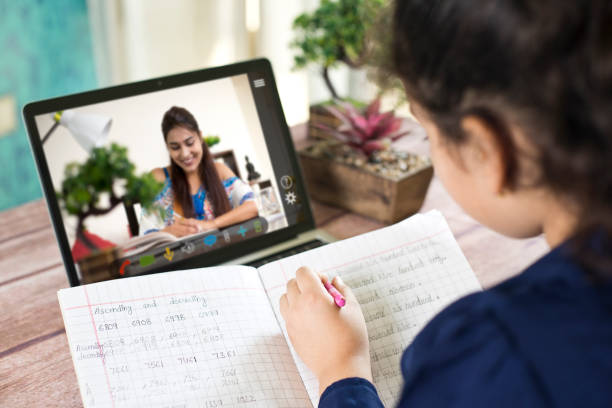
Virtual classrooms (in one form or another) have existed since the very early days of the Internet. While considered quite novel at the time, they have now become altogether commonplace. This is a clear example of how the digital age continues to transform the ways in which students obtain knowledge. However, remote learning is far from the only innovation that we have witnessed over the past few years. A handful of other options are now available, and each of these offers even more bespoke opportunities. Let’s examine four interesting examples.
On-Demand Printing Services
Many students are still required to write physical papers. Essays, dissertations, and doctoral papers are three common obligations. This is why certain companies now offer personalised solutions that can be used to enhance the overall presentation. Quality dissertation binding, essay templates, and programs that will automatically detect plagiarised material may all be accessed in a matter of seconds. Physical copies of the finished products can likewise be shipped to the customer; ideal when tackling last-minute changes.
Goodbye, Blackboards
Many readers are old enough to recall the days when the centrepieces of the typical classroom were blackboards. These are slowly being phased out, and being replaced with digital signage displays. Digital signage is said to provide a more immersive overall experience, and it can also present far more information than a teacher would be able to physically write on a traditional blackboard. These displays may also be linked via wireless connections to other devices (such as tablets).
Customised Online Courses
Online classrooms have likewise been engineered to offer much more targeted solutions when compared to previous models. Student-to-teacher ratios have dropped; resulting in a greater degree of personalisation. Courses can be recorded so that members may view the material at a later date. Forums allow students to communicate with one another, and these can also function as extracurricular help sessions when required. Similar to other forms of virtual education such as online trading seminars, remote learning truly represents the wave of the future.
Large Language Models
Sometimes referred to by the acronym LLM, Large Language Models are yet another recent advancement predicted to take the educational community by storm. Perhaps the most relevant example here can be seen in the ChatGPT online interface. These systems use a type of intelligence known as Generative AI; a much more intuitive form of traditional AI. As a result, LLMs can accurately address complex queries, they are less likely to produce spurious results, and they may even be capable of replicating real-world human interactions in the near future. Some systems can also perform tasks such as translating a text statement into an image, or summarising extremely complicated material within a matter of seconds. It is clear to see the appeal of Large Language Models in relation to education.
While these are truly amazing observations, we still need to remember that students must possess the passion to learn. This is why the role of teachers is critical, and hands-on education will never be fully replaced.
